

April 22 marks World Earth Day. China Railway Group Limited (CREC) has unswervingly adhered to the high-quality development path prioritizing ecology, green development and low carbon. With steel and iron as the brush and ingenuity and wisdom as the ink, it draws magnificent blueprints for ecological and environmental protection, empowering environmental governance and ecological civilization construction, and making the sky bluer, mountains greener and water clearer.
The Wenchang Section of Hainan Round-island Tourism Highway undertaken by China Railway Beijing Engineering Group starts at Yunlouxi, Puqian Town, Wenchang City and ends at the boundary between Wenchang City and Qionghai City, with a total length of 160.532 kilometers. At the initial stage of construction, a precious mangrove forest including rare species such as rhizophora apiculata, ceriops tagal and bruguiera sexangula was discovered in the planned route. The project team conducted multiple on-site surveys to record the growth of mangroves and accurately monitor key water and soil data. It optimized the plan by learning from transplantation cases, invited experts for whole-process guidance, and cooperated with multiple departments to verify the site selection and overcome technical difficulties. The mangroves have been successfully transplanted along the round-island highway with complete management and protection measures, realizing the integrated development of ecological protection and project construction.
Nanjing-Yancheng Expressway participated in the construction by China Railway Seventh Group is an important part of the third radial line in Jiangsu's expressway planning network of six vertical, ten horizontal and fifteen radial lines, with a total length of 126.6 kilometers. China Railway Seventh Group undertook Lot 5 of Yangzhou Section of Nanjing-Yancheng Expressway. Among them, Gaoyou Lake Extra-large Bridge, a control project along the whole line with a total length of about 8.8 kilometers, passes through two wetland nature reserves of Gaoyou Lake and Shaobo Lake, crosses the Huaihe River water diversion channel and the Beijing-Hangzhou Grand Canal, with a wide variety of protected animals and plants in the region. The project team built a full-chain green prevention and control system, set up bird observation stations, and adopted closed construction and staggered operation to protect wetland ecology. Meanwhile, it implemented synchronous greening during construction and timely reclamation and afforestation, equipped with intelligent dust reduction and cleaning equipment, and promoted measures such as sewage recycling, solid waste disposal and energy conservation and carbon reduction, striving to build an all-round green project.
The Industrial Company of China Railway Electrification Engineering Group has built Baoji's first building integrated photovoltaic (BIPV) project in the High-speed Railway Electrical Technology Industrial Park. A total of 9,318 monocrystalline silicon photovoltaic modules are installed on the roofs of 4 factory buildings, with a total installed capacity of 5.9 MW and an annual power generation of about 6.0714 million kWh. Adopting the mode of self-consumption and surplus power grid connection, it can meet 60% of the factory's production electricity demand, with surplus power connected to the grid for surrounding use. It has remarkable environmental benefits, saving 1,825.25 tons of standard coal and reducing more than 6,300 tons of carbon dioxide and other pollutant emissions every year.
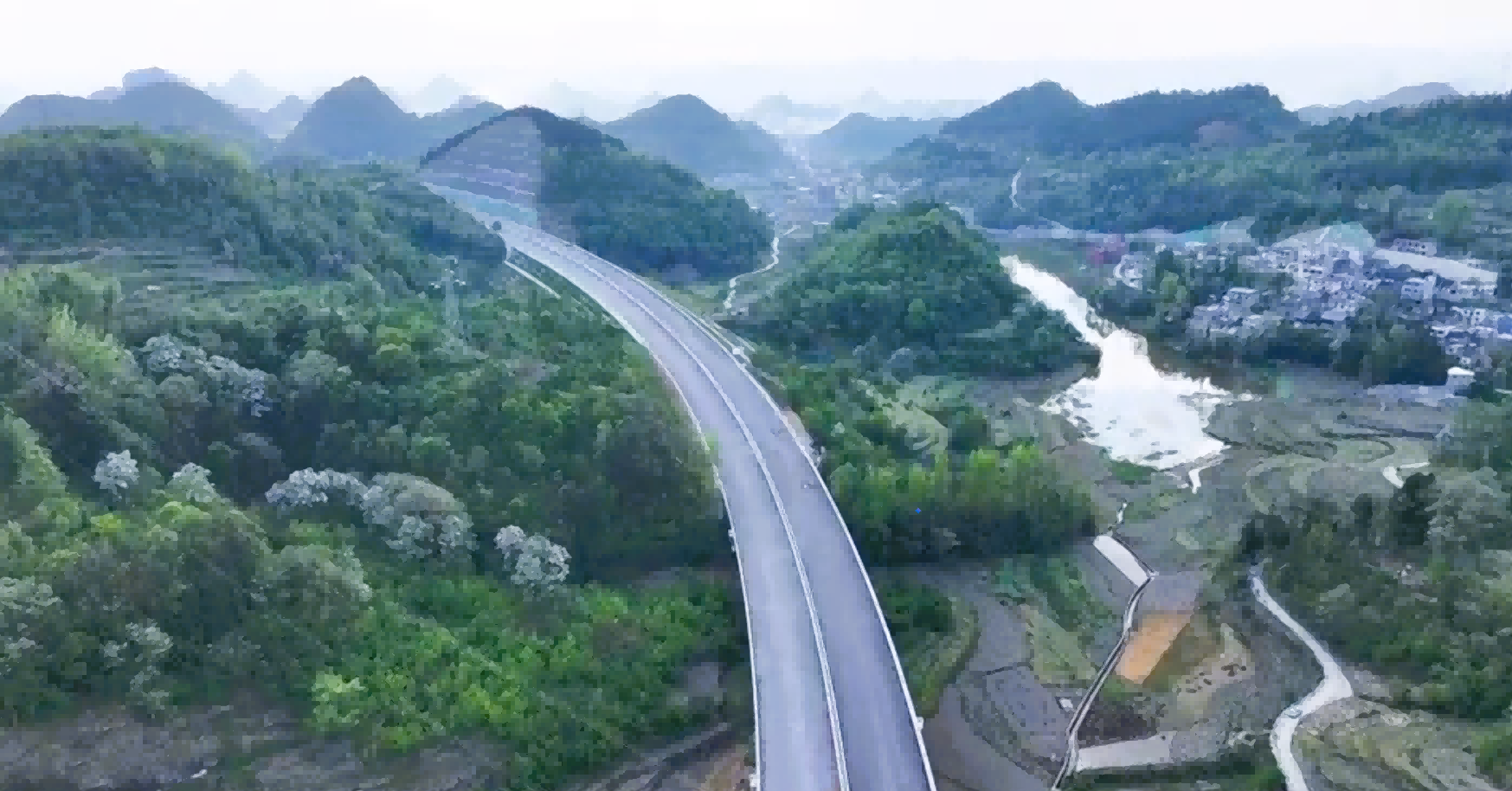
The Anshun-Panzhou (Guizhou-Yunnan Border) Section Expansion Project of Shanghai-Kunming National Expressway, participated in the construction by China Railway Sixth Group, is located in the southwestern part of Guizhou Province, with a main line length of about 130.8 kilometers. It is a key link connecting the southwest coastal passage, serving the "Belt and Road" and the Western Land-Sea Corridor. The APTJ-1 Section undertaken by China Railway Sixth Group is located in Puding County, Anshun City, with a total length of 18.985 kilometers. It includes 1 bridge, 1 subgrade, 1 hub interchange and 1 landing interchange, and is responsible for the overall implementation of all building projects from K0+000 to K45+164, as well as the electromechanical systems of 3 tunnels within the civil engineering Lot 3. The project has a large scale, many interfaces and high ecological sensitivity. Up to now, the section has completed more than 400,000 square meters of slope ecological restoration, with a vegetation survival rate of over 80%; the environmental monitoring data during the construction period has achieved 100% compliance for 12 consecutive months.
The Erhai Lake Basin Wetland Park Protection and Upgrade Renovation Project undertaken by the 5th Branch of China Railway No.10 Engineering Group is located in Eryuan County, Dali, Yunnan Province, with a total construction area of 14,463.1 mu. The project has repaired a total of 1,571 mu of wetlands and buffer zones, 3,928 mu of reservoir and pond substrates, and upgraded more than 11,000 mu of wetlands. After comprehensive management, the wetland pollutant reduction rate has increased by 10% to 35%, the water quality of the old and new Yong'an Rivers has jumped from Class Ⅳ to Class Ⅱ, and the water quality of the Luoshi River has improved from Class Ⅳ to Class Ⅲ. The key indicators of Erhai Lake's water source meet the national high-quality water source standards.
The PPP Project for Ecological Restoration and Comprehensive Management of the Riverside Rainforest in the Upper Reaches of Changhua River, Wuzhishan, Hainan, undertaken by China Railway No.5 Engineering Group, coordinates river management, pipe network upgrading and rainforest quality improvement in construction. Wuzhishan City has a forest coverage rate of as high as 90.1%, and the Nansheng River, a tributary of the Changhua River, is an important guarantee for the city's ecology and people's livelihood. Focusing on urban sewage treatment, the project has built and repaired sewage main pipes, renovated inspection wells, implemented interception and renovation of sewage outlets, and completely solved the problems of direct sewage discharge and rainwater overflow. At the same time, it has carried out river ecological restoration, river beach substrate reconstruction, river bank buffer zone management, and built multiple ecological water storage facilities. After comprehensive management, the river environment has been significantly improved, transforming into an ecological corridor with clear water and green banks, realizing the coordinated development of ecological protection and urban livability.