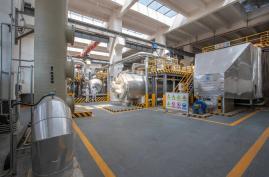
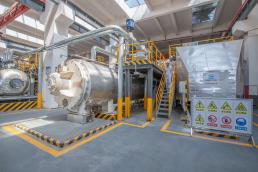
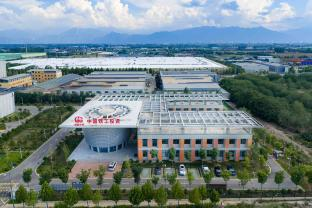
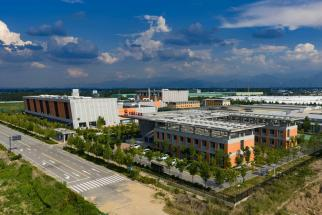
Recently, a case titled “Harmless Treatment and 100% Resource Utilization of Municipal Sludge in Fengxi New City, Xixian New Area—A Synergistic Pollution Reduction and Carbon Reduction Project,” submitted by Xi’an CREC Environmental Technology Co., Ltd. under China Railway Engineering Investment and China Railway Water Affairs, was successfully selected for the Basel Convention Asia-Pacific Regional Centre’s “2025 Recommended English Case List for Zero-Waste City Development.”
The initiative, organized by the Basel Convention Asia-Pacific Regional Centre, aims to promote China’s experience in “zero-waste city” development to the international community. Since the launch of the case collection, a total of 109 submissions were received from 40 cities (regions) across 19 provinces, autonomous regions, and municipalities. Following rigorous formal reviews, domestic expert evaluations, and international institutional assessments, 25 English-language cases were ultimately selected as recommended models.
“Zero-waste city” development is a key driver of urban green and low-carbon transformation, emphasizing source reduction of solid waste, improved resource efficiency, and environmentally friendly growth. Based on the Fengxi sludge treatment project, this case—featuring a “two-stage drying plus pyrolysis gasification” process—demonstrates strong performance and innovation in synergistic pollution and carbon reduction. It is the only selected case from northwest China, offering significant demonstration value and reference potential.
The Basel Convention, formally titled the “Convention on the Control of Transboundary Movements of Hazardous Wastes and Their Disposal,” was adopted on March 22, 1989, at a United Nations Environment Programme conference in Basel, Switzerland, and entered into force in May 1992. It aims to curb the transboundary movement of hazardous waste, particularly preventing its export to developing countries.